
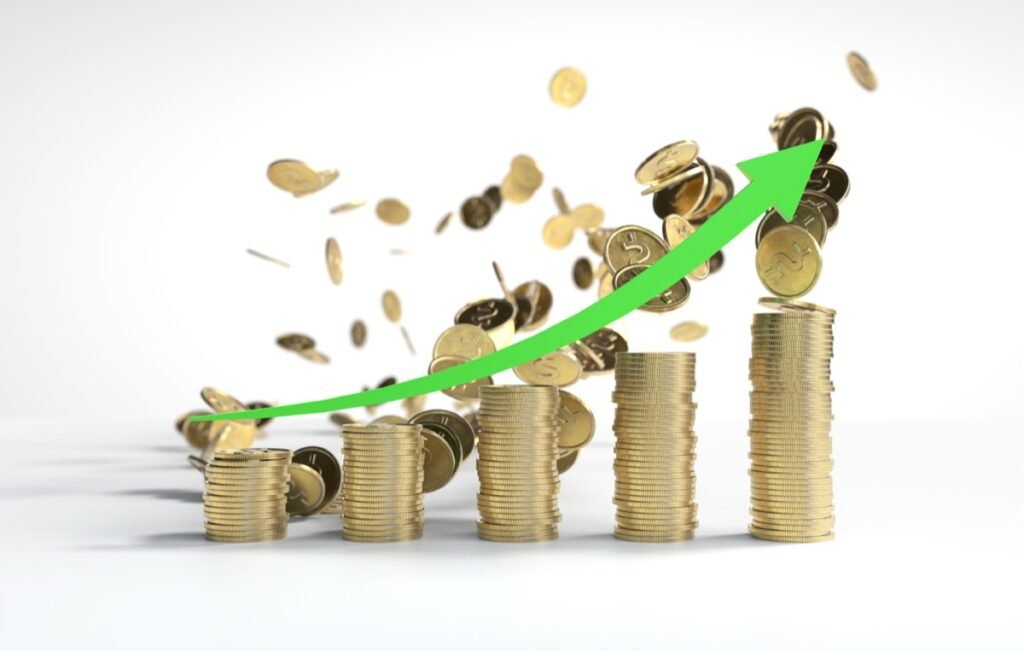
Compound interest is one of the most important ideas in personal finance.
It can help your savings grow faster, increase long-term investment returns, and make a big difference to how much money you end up with over time. But it can also work against you when you borrow money, especially on debts where interest is added regularly.
The good news is that compound interest is easier to understand than it sounds.
In simple terms, compound interest means you earn interest on your original money and on the interest already added.
This guide explains how compound interest works, how to calculate it, and why time is one of the biggest factors in how much your money can grow.
What Is Compound Interest?
Compound interest is interest calculated on both:
- The original amount of money
- Any interest already earned
This differs from simple interest, where interest is calculated only on the original amount.
For example, if you save £1,000 and earn 5% interest, you earn £50 in the first year.
If that interest stays in the account, your balance becomes £1,050.
In the second year, you earn interest on £1,050, not just the original £1,000.
That is compound interest.
Your money starts earning money of its own.
Compound Interest vs Simple Interest
The easiest way to understand compound interest is to compare it with simple interest.
Simple Interest
With simple interest, you only earn interest on the original amount.
For example:
- Starting amount: £1,000
- Interest rate: 5%
- Time: 3 years
With simple interest, you earn:
£1,000 × 5% = £50 per year
After 3 years:
£1,000 + £150 = £1,150
Compound Interest
With compound interest, the interest is added to your balance, and future interest is calculated on the new total.
Using the same example:
- Starting amount: £1,000
- Interest rate: 5%
- Time: 3 years
Year 1:
£1,000 × 1.05 = £1,050
Year 2:
£1,050 × 1.05 = £1,102.50
Year 3:
£1,102.50 × 1.05 = £1,157.63
After 3 years, compound interest gives you £1,157.63, compared with £1,150 from simple interest.
That may not look like a huge difference over 3 years, but over 10, 20 or 30 years, the gap can become much larger.
Compound Interest Formula
The standard compound interest formula is:
A = P × (1 + r)ⁿ
Where:
- A = final amount
- P = principal, or starting amount
- r = interest rate as a decimal
- n = number of compounding periods
For example, if you invest £1,000 at 5% per year for 10 years:
A = 1,000 × (1 + 0.05)¹⁰
A = 1,000 × 1.6289
A = £1,628.89
So, £1,000 growing at 5% per year for 10 years would become around £1,628.89, assuming the interest is compounded annually and no withdrawals are made.
How to Calculate Compound Interest Step by Step
To calculate compound interest manually:
- Start with your original amount.
- Convert the interest rate into a decimal.
- Add 1 to the interest rate.
- Raise it to the number of years or compounding periods.
- Multiply by your starting amount.
Example:
- Starting amount: £2,000
- Annual interest rate: 4%
- Time: 5 years
Convert 4% to a decimal:
4% = 0.04
Add 1:
1 + 0.04 = 1.04
Raise to the power of 5:
1.04⁵ = 1.21665
Multiply by £2,000:
£2,000 × 1.21665 = £2,433.30
So, after 5 years, your money would grow to approximately £2,433.30.
The interest earned would be:
£2,433.30 – £2,000 = £433.30
What Does “Compounding” Mean?
Compounding means interest is added to your balance and then starts earning interest itself.
The more often interest is compounded, the more often your balance is updated.
Common compounding frequencies include:
- Daily
- Monthly
- Quarterly
- Annually
For savings accounts, interest may be calculated daily but paid monthly or annually. For investments, growth is not usually a fixed interest rate, but the principle of compounding still applies when returns are reinvested.
Annual, Monthly and Daily Compounding
The compounding frequency can affect the final amount.
For example, a 5% annual interest rate compounded monthly will usually produce a slightly higher result than 5% compounded once per year.
This is because interest is added more frequently, giving it more time to earn further interest.
Example
Starting with £1,000 at 5% interest for 1 year:
| Compounding Type | Approximate Final Balance |
| Annually | £1,050.00 |
| Monthly | £1,051.16 |
| Daily | £1,051.27 |
The difference over one year is small. But over longer periods and larger balances, compounding frequency can have a bigger effect.
Why Time Matters So Much
Time is one of the most powerful parts of compound interest.
The longer your money stays invested or saved, the more opportunity it has to grow.
For example, imagine you save £5,000 at 5% annual compound interest.
| Time | Approximate Value |
| 5 years | £6,381 |
| 10 years | £8,144 |
| 20 years | £13,266 |
| 30 years | £21,610 |
The growth becomes more noticeable later because you earn interest on a larger and larger balance.
This is why compound interest is often described as slow at first, then powerful over time.
Example: Saving £100 Per Month with Compound Interest
Compound interest becomes even more useful when you add money regularly.
For example, suppose you save £100 per month for 20 years and earn an average annual return of 5%.
Without interest, you would save:
£100 × 12 × 20 = £24,000
With compound growth, the final amount could be significantly higher because each contribution has time to grow.
The exact result depends on how interest is calculated and when each payment is made, but the key point is simple:
Regular saving plus compound growth can build a much larger pot over time.
This is why a compound interest calculator is useful. It can estimate how much your money could grow when you include regular monthly deposits and a starting balance.
Compound Interest on Savings
Compound interest is commonly used in savings accounts.
If your savings account pays interest and you leave that interest in the account, your balance can grow over time.
For example:
- Starting savings: £3,000
- Interest rate: 4%
- Time: 5 years
After 5 years, compounded annually, your savings would grow to around:
£3,650
That includes around £650 in interest.
Savings accounts are usually lower risk than investing, but the interest rate may also be lower. The amount you earn depends on the savings rate, account type, tax position and whether interest is paid into the same account.
Compound Interest on Investments
Compound growth is also important for investments.
With investing, returns are not usually fixed like a savings interest rate. The value can rise and fall.
However, compounding can happen when:
- Dividends are reinvested
- Investment returns remain invested
- Growth is left to build over many years
- Contributions are made regularly
For example, if your investment grows and you leave the gains invested, future growth is based on a larger amount.
This is why long-term investing often focuses on time in the market rather than trying to time the market perfectly.
However, investments can go down as well as up, and you may get back less than you put in.
Compound Interest on Debt
Compound interest can also work against you.
If you borrow money and interest is added to the balance, you may end up paying interest on interest.
This can happen with some types of debt, especially if you do not make enough repayments to reduce the balance.
Examples may include:
- Credit cards
- Overdrafts
- Some loans
- Unpaid interest on certain finance products
This is why high-interest debt can grow quickly if you don’t manage it.
The same principle applies:
Compounding helps when you earn interest, but hurts when you owe interest.
The Difference Between Interest Rate and AER
When comparing UK savings accounts, you may see the term AER.
AER stands for Annual Equivalent Rate.
It shows what the interest rate would be if interest were paid and compounded over a year. This helps you compare savings accounts more fairly, even if they pay interest at different frequencies.
For example, one account may pay interest monthly and another annually. AER gives a clearer annual comparison.
When choosing a savings account, it is worth checking:
- The interest rate
- The AER
- Whether the rate is fixed or variable
- Whether withdrawals are restricted
- Whether there is a bonus rate
- Whether interest is paid monthly or annually
Does Tax Affect Compound Interest in the UK?
Tax can affect how much of your interest you keep.
In the UK, many people can earn some savings interest tax-free through the Personal Savings Allowance. For the 2026 to 2027 tax year, GOV.UK lists the Personal Allowance as £12,570 and confirms that savings interest falls under Income Tax rules.
The Personal Savings Allowance depends on your Income Tax band. GOV.UK states that basic-rate taxpayers can get up to £1,000 of savings interest tax-free, while higher-rate taxpayers can get up to £500. Additional-rate taxpayers do not get a Personal Savings Allowance.
You can also use ISAs to shelter savings or investments from tax. For the 2026 to 2027 tax year, the maximum you can save into ISAs is £20,000.
Tax rules can change, so check the latest guidance before making financial decisions.
Compound Interest and ISAs
An ISA can be useful because interest, dividends or investment gains inside the ISA can be tax-efficient.
There are different types of ISA, including:
- Cash ISA
- Stocks and shares ISA
- Lifetime ISA
- Innovative finance ISA
A Cash ISA may be used for savings interest, while a stocks and shares ISA may be used for investments.
For the 2026 to 2027 tax year, GOV.UK says you can save up to £20,000 in one ISA or split the allowance across multiple ISAs.
This matters for compound interest because keeping returns tax-free may help more of your money stay invested or saved, giving it more opportunity to compound over time.
How Inflation Affects Compound Interest
Compound interest helps your money grow, but inflation affects what your money can buy.
For example, if your savings grow by 4% per year but prices rise by 3% per year, your money is still growing in real terms, but by less than the headline interest rate.
If inflation is higher than your savings rate, your balance may increase, but your spending power could fall.
That is why it is useful to think about:
- The interest rate you earn
- The effect of tax
- The rate of inflation
- Your real return after inflation
A good savings rate is not just about the number shown by the bank. It is about how much value your money keeps or gains over time.
Rule of 72: A Quick Compound Interest Shortcut
The Rule of 72 is a simple way to estimate how long it might take for money to double.
Use this formula:
Years to double = 72 ÷ annual return percentage
For example, if your money grows at 6% per year:
72 ÷ 6 = 12
So, at 6% annual growth, your money would take roughly 12 years to double.
If your money grows at 4% per year:
72 ÷ 4 = 18
So, at 4% annual growth, it would take roughly 18 years to double.
This is only an estimate, but it helps show the long-term effect of compound growth.
Compound Interest Example: £1,000 Over 10 Years
Here is a simple example showing how £1,000 could grow over 10 years at different annual compound interest rates.
| Annual Interest Rate | Value After 10 Years | Interest Earned |
| 2% | £1,219 | £219 |
| 3% | £1,344 | £344 |
| 5% | £1,629 | £629 |
| 7% | £1,967 | £967 |
| 10% | £2,594 | £1,594 |
This shows how much difference the interest rate can make over time.
A higher rate can lead to more growth, but with investments, higher expected returns usually come with higher risk.
Compound Interest Example: £10,000 Over 20 Years
Now let’s look at a larger amount over a longer period.
If you started with £10,000 and left it for 20 years, compounded annually:
| Annual Interest Rate | Value After 20 Years |
| 2% | £14,859 |
| 3% | £18,061 |
| 5% | £26,533 |
| 7% | £38,697 |
| 10% | £67,275 |
The difference becomes much larger over time because compounding accelerates.
At 2%, the money grows by around £4,859.
At 10%, it grows by around £57,275.
That does not mean you should chase the highest return. It means the rate, time period and risk level all matter.
Why Compound Interest Starts Slowly
Compound interest can feel underwhelming at first.
In the early years, most of the growth comes from your own contributions or the original amount. The interest earned may seem small.
But later, the balance is bigger, so the interest added each year can also be bigger.
For example, 5% interest on £1,000 is £50.
But 5% interest on £20,000 is £1,000.
The percentage is the same, but the cash amount is much larger because the balance is larger.
This is why compound interest rewards patience.
How Regular Contributions Help Compound Growth
Starting with a lump sum is useful, but regular contributions can make compound growth even stronger.
For example, saving £100 per month means you are adding £1,200 per year.
If that money also earns interest or investment returns, each contribution can grow.
Regular contributions are helpful because they:
- Build the saving habit
- Increase the amount being compounded
- Reduce reliance on one large lump sum
- Can smooth out investment timing over time
- Help you make progress even with smaller amounts
For many people, consistent monthly saving is more realistic than waiting until they have a large lump sum.
How to Grow Money with Compound Interest
To benefit from compound interest, the main principles are simple.
Start Early
The longer your money grows, the more powerful compounding becomes.
Leave the Interest Alone
If you withdraw the interest, it cannot earn more interest.
Leaving it in the account allows compounding to continue.
Add Money Regularly
Regular contributions increase the balance and give compounding more to work with.
Look for a Competitive Rate
A higher interest rate can make a big difference over time, especially over many years.
Keep Costs and Tax in Mind
Fees, charges and tax can reduce your final return.
Avoid Unnecessary Withdrawals
Taking money out reduces the amount that can compound in future.
Compound Interest Mistakes to Avoid
Thinking It Only Matters for Large Amounts
Even small amounts can grow over time if you save regularly and leave the interest to build.
Ignoring the Time Period
Compound interest works best over longer periods. Short-term results may look modest.
Forgetting About Inflation
Your balance may rise, but inflation affects your real spending power.
Confusing Fixed Interest with Investment Returns
Savings interest may be predictable, but investment returns are not guaranteed.
Leaving Money in a Poor-Rate Account
If your savings rate is very low, compounding will have less impact.
Letting Debt Compound Against You
High-interest debt can grow quickly if interest is added and repayments are too low.
Compound Interest for Beginners: Simple Summary
Compound interest means earning interest on your interest.
If you save or invest money and leave the returns to build, future growth is based on a larger balance.
The main things that affect compound interest are:
- How much you start with
- How much you add
- The interest rate or return
- How long the money grows
- How often interest is compounded
- Tax, fees and inflation
The longer the time period, the more powerful compounding can become.
Final Thoughts on Compound Interest
Compound interest is a simple idea with a big long-term impact.
When you earn interest and leave it in place, your balance grows. Then future interest is calculated on that larger balance. Over time, this can help your money grow faster than it would with simple interest.
The same principle can also work against you if you owe money and interest is added to your debt.
For savers and investors, the key lessons are clear: start early, contribute regularly, let your returns grow, and understand the effects of rates, tax, and inflation.
A compound interest calculator can help you see the numbers clearly and compare different savings or investment scenarios before making a decision.
FAQ about compound interest
What is compound interest in simple terms?
Compound interest means earning interest on your original money and on the interest already added. This helps your balance grow faster over time.
How does compound interest work?
Compound interest works by adding interest to your balance. The next time interest is calculated, it is based on the new, larger balance. This means your interest can start earning interest.
What is the compound interest formula?
The basic compound interest formula is:
A = P × (1 + r)ⁿ
Where A is the final amount, P is the starting amount, r is the interest rate as a decimal, and n is the number of compounding periods.
Is compound interest good or bad?
Compound interest is good when you are earning it on savings or investments. It can be bad when it works against you on debt, because you may be charged interest on interest.
What is an example of compound interest?
If you save £1,000 at 5% interest, you earn £50 in the first year. If that interest stays in the account, your balance becomes £1,050. In the second year, interest is calculated on £1,050 instead of £1,000.
How long does compound interest take to work?
Compound interest can start working straight away, but the biggest results usually appear over longer periods. The longer your money stays saved or invested, the more time it has to grow.
What is the Rule of 72?
The Rule of 72 is a quick way to estimate how long money might take to double. Divide 72 by the annual return percentage. For example, at 6% growth, money may take about 12 years to double.
Does compound interest apply to savings accounts?
Yes, many savings accounts use compound interest if you leave the interest in the account. The interest then becomes part of the balance and can earn more interest in future.
Does compound interest apply to investments?
Yes, compound growth can apply to investments when you reinvest returns and let them grow. However, investment returns are not guaranteed, and values can rise or fall.
Can compound interest make you rich?
Compound interest can help build wealth over time, especially when combined with regular contributions and patience. However, the final result depends on how much you save or invest, the return achieved, time, tax, fees and inflation.