
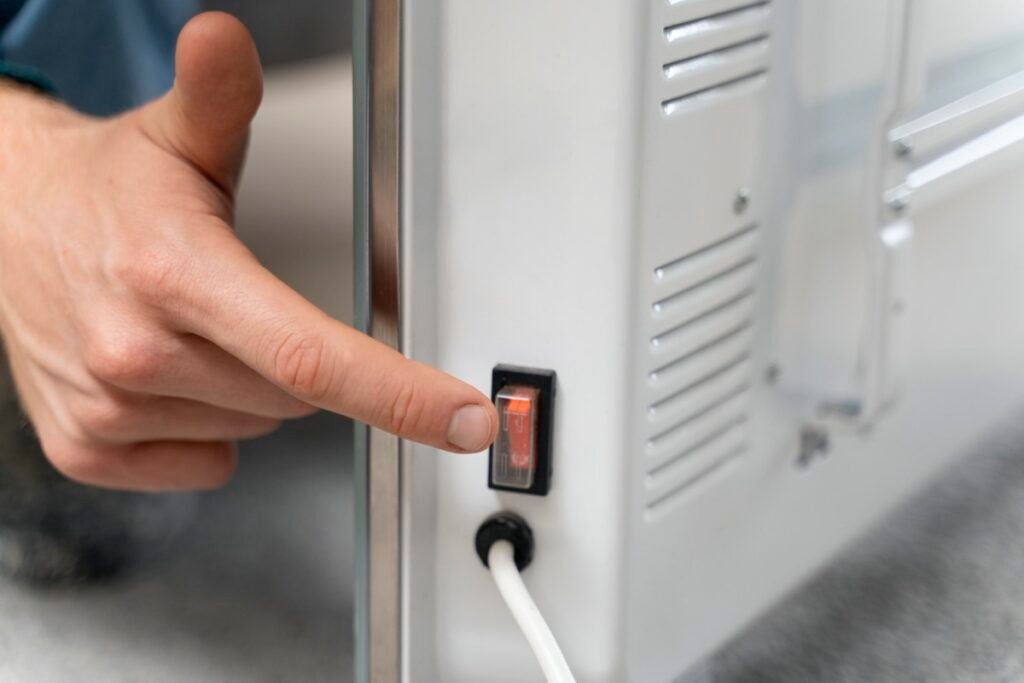
Leaving appliances on standby might not feel like a big deal, but the cost adds up over time. Phone, chargers, TVs, game consoles, speakers, microwaves, routers, and kitchen appliances can all continue to draw electricity even when they are not being actively used. Energy Saving Trust says switching appliances off standby can save around £45 a year in Great Britain and £55 a year in Northern Ireland, which shows that small amounts of wasted electricity can add up across a whole home.
What does standby power mean?
Standby power is the electricity an appliance uses when it is switched off but still plugged in and ready to start quickly, show a light, keep settings saved, or stay connected to the internet. This is sometimes called phantom load, vampire power, or idle power.
Common examples include:
- TVs with a red standby light
- games consoles in rest mode
- microwaves showing the clock
- smart speakers waiting for voice commands
- printers left ready to wake up
- chargers left plugged in
- broadband routers running all day
Not every plugged-in device uses meaningful standby power, but many do. Energy Saving Trust specifically recommends switching appliances off standby where possible and notes that most electrical appliances can be turned off at the plug without upsetting their programming.
How much does standby power cost?
The cost depends on three things:
- the power draw in watts
- how many hours the appliance stays on standby
- your electricity price per kWh
The formula is:
Standby cost = (Watts ÷ 1,000) × Hours × Electricity price per kWh
NeedCalculator’s own Electricity Running Cost Calculator already uses the same logic to estimate daily, monthly, and yearly electricity costs from wattage, hours used, and price per kWh.
As of 1 July to 30 September 2026, Ofgem’s average electricity unit rate for a typical Direct Debit customer on the price cap is 26.11p per kWh. That is a useful benchmark for working out standby costs, although your own tariff may be different.
A simple standby cost example
Let’s say an appliance uses 3 watts on standby and is left like that all day, every day.
- 3W = 0.003 kW
- 24 hours a day × 365 days = 8,760 hours a year
- 0.003 × 8,760 = 26.28 kWh per year
- 26.28 × £0.2611 = about £6.86 per year
That may not sound huge on its own, but if several devices around your home are each wasting a few pounds a year, the total adds up quickly. That is exactly why Energy Saving Trust’s household estimate reaches around £45 a year in Great Britain.
Which appliances commonly use standby power?
Standby use varies by model, age, and features, but the devices most often associated with standby consumption include:
- televisions
- set-top boxes and streaming devices
- games consoles
- desktop monitors
- printers
- microwaves with digital displays
- smart speakers
- Wi-Fi routers
- chargers and adapters
- kitchen appliances with clocks or touch panels
The bigger issue is not always one single device. It is the combined effect of lots of always-on items spread around the house. NeedCalculator’s calculator page already highlights standby devices as one of the areas where small changes can make a noticeable impact on bills.
How much could common standby devices cost?
Here are a few rough examples using Ofgem’s average electricity rate of 26.11p per kWh for 1 July to 30 September 2026. These are illustrative, not official product averages.
1 watt on standby
- Annual energy use: 8.76 kWh
- Annual cost: about £2.29
2 watts on standby
- Annual energy use: 17.52 kWh
- Annual cost: about £4.57
5 watts on standby
- Annual energy use: 43.8 kWh
- Annual cost: about £11.44
10 watts on standby
- Annual energy use: 87.6 kWh
- Annual cost: about £22.88
This shows why a few low-level standby loads do not look serious in isolation, but a collection of devices using 3W, 5W, or more can turn into a real annual cost.
Is standby power really worth worrying about?
In most homes, standby power is not the biggest part of the bill. Heating, hot water, tumble dryers, ovens, kettles, and other high-use appliances usually cost much more overall. Which? notes that appliances that cool or heat water or air tend to be among the most expensive to run, based on current electricity pricing assumptions.
But standby power is still worth dealing with because:
- it is easy to reduce
- it costs money for no useful output
- it happens constantly, all year round
- the fix is often free
That makes it one of the easiest “quick win” savings in the home.
Which standby devices should you switch off?
Good targets include:
- second TVs and rarely used entertainment devices
- games consoles left in rest mode
- printers not used often
- microwave displays if you do not need the clock
- speakers and audio systems
- chargers left plugged in without a device connected
Some devices are different. Routers, smart home hubs, digital recorders, or security systems may need to stay powered for convenience or function. Energy Saving Trust says most appliances can be turned off at the plug without upsetting settings, but not every device will make sense to switch off every time.
How to cut standby electricity costs
The best approach is to target the easiest waste first.
Switch off at the plug
This is the simplest fix for many appliances and often costs nothing.
Use smart power strips or standby savers
These help switch multiple devices off together, which is useful for TVs, consoles, and entertainment setups. Energy Saving Trust specifically mentions standby savers as an option.
Unplug chargers when not in use
One charger on its own may not cost much, but several adapters left plugged in all the time create unnecessary background usage.
Prioritise rarely used devices
A printer used once a week does not need to be drawing power every hour of the year.
Check what actually costs money
This is where NeedCalculator’s Electricity Running Cost Calculator becomes valuable. You can enter an estimated standby wattage, multiply it over long hours, and see the likely annual cost more clearly.
Leaving appliances on standby probably will not be the single biggest reason your electricity bill is high, but it is one of the easiest hidden costs to reduce. With Ofgem’s average electricity rate at 26.11p per kWh from 1 July to 30 September 2026, even a few watts running all year can add up. And across several devices, that can easily turn into the kind of annual waste Energy Saving Trust estimates at around £45 a year in Great Britain.
The main takeaway is simple: standby power is small per device, but constant. That makes it worth tackling, especially when the fix is often as easy as switching something off at the plug.
Cost of Standby FAQ
How much does it cost to leave appliances on standby?
It depends on the wattage and how long the device stays on standby, but Energy Saving Trust says switching appliances off standby can save around £45 a year in Great Britain.
Do appliances use electricity when turned off?
Some do. If they are plugged in and still showing lights, clocks, network connection, or fast-start features, they may still be using standby power.
What appliances use the most standby power?
Common examples include TVs, set-top boxes, games consoles, printers, microwaves, smart speakers, and other devices that stay ready to wake up or display information.
Is standby power expensive?
Usually not from one single device, but several devices left on all year can add up to a noticeable annual cost, especially at current electricity prices.
How can I reduce standby power at home?
Switch appliances off at the plug, use standby savers or smart strips, unplug chargers, and focus first on devices you do not use often.